Organizational Network Analysis (ONA)
See How Work Really Gets Done—Before Your Next Change
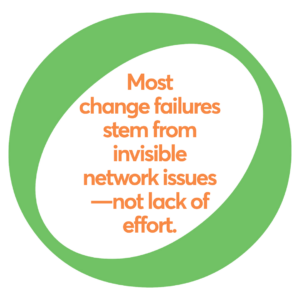
Informal networks drive up to 80% of performance. Yet most leaders plan change as if formal structure is what matters.
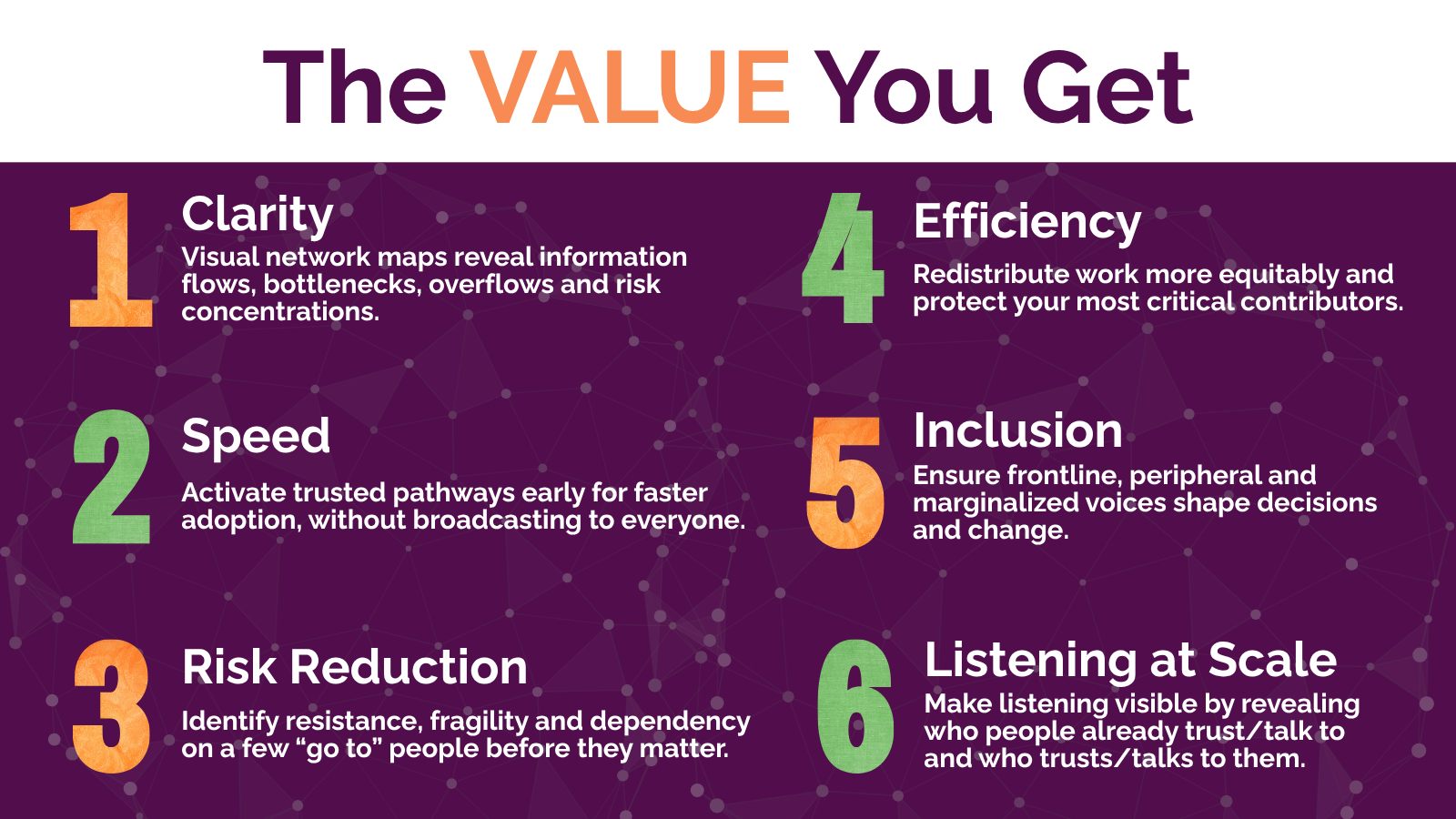
Organizational Network Analysis (ONA) makes invisible networks visible—so leaders can see how information, influence and work actually flow across the enterprise.
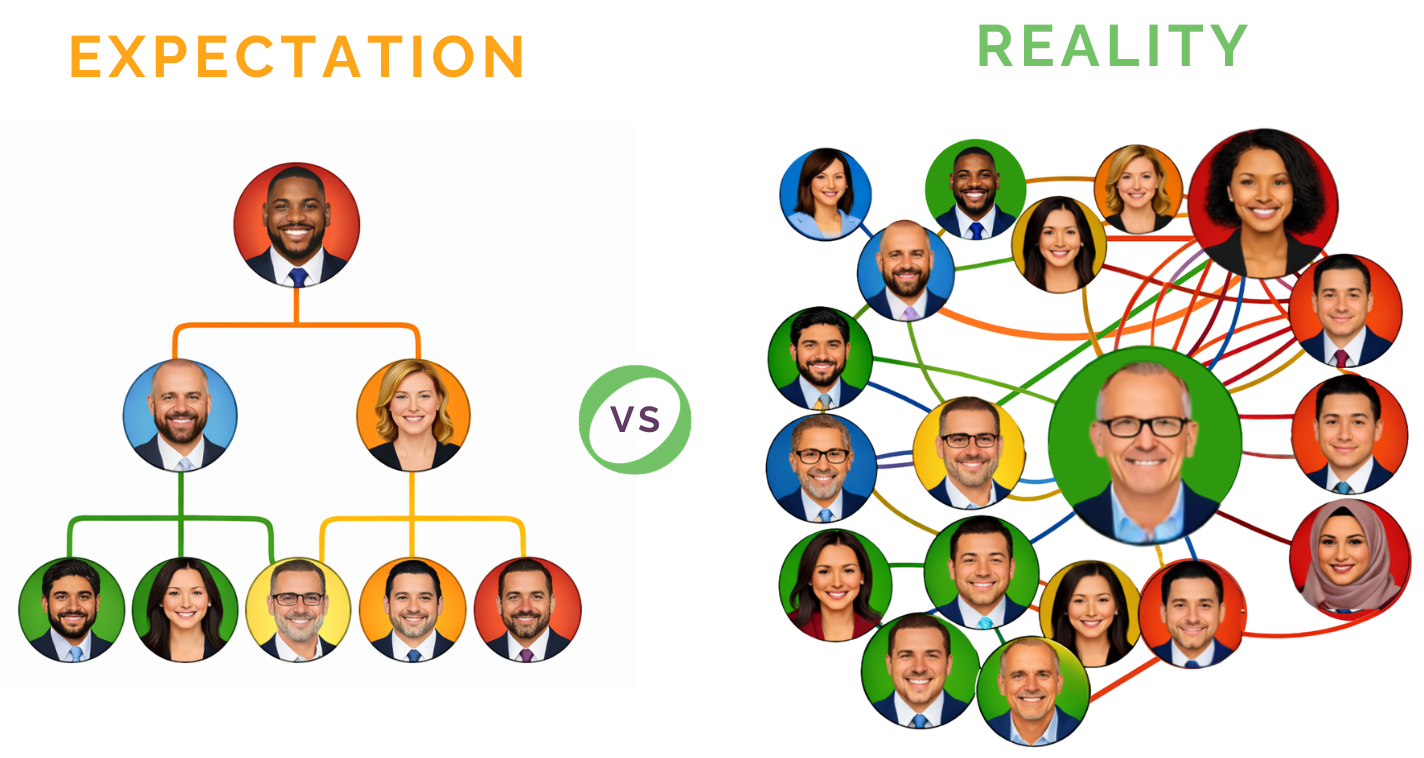
What ONA Reveals That Traditional Analytics Miss
Drawing on leading research in systems and network dynamics, ONA shows how people truly:
- Collaborate across boundaries
- Share (or withhold) information
- Solve problems when pressure rises
- Influence decisions and adoption
- Get work done—despite formal processes
Instead of averages, ONA exposes structural differences that drive outcomes: overload, bottlenecks, fragility and untapped resilience.
What Leaders Learn—Quickly and Credibly
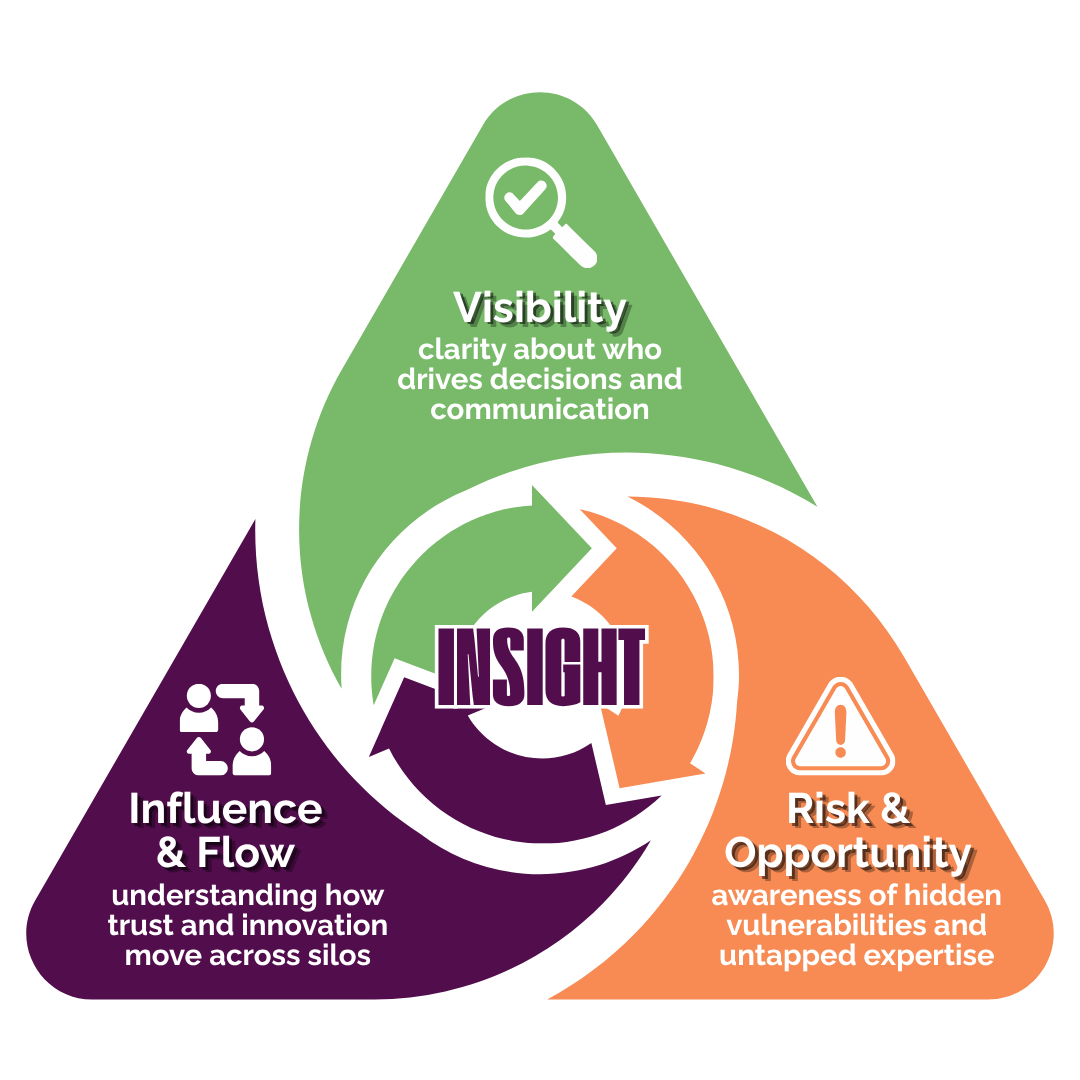
ONA surfaces what leaders need to know but rarely see:
- Who people actually go to for decisions and problem-solving
- Where hidden risks and points of failure live
- Which subject matter experts are isolated or underutilized
- How communication really moves across silos
- Who holds informal power and influence
- Why some changes spread—and others stall
- Where innovation and knowledge sharing break down
From “Change Readiness” to Network Readiness
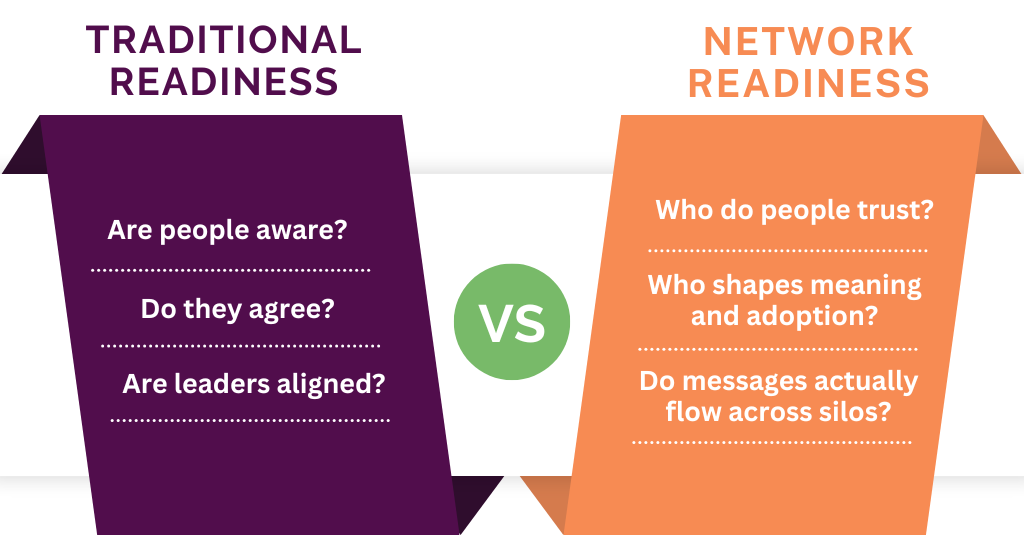
ONA sets the stage for change success—before formal announcements are made.
ONA Works (Without Survey Fatigue)
Ahead of a transformation, we:
- Map informal influencers, sense-makers, and blockers
- Identify a small, credible “change spine” instead of hoping mass communication works
- Surface assets and liabilities in your change network
A focused ONA—often as few as 10 questions over 2–3 weeks to reveal where change will accelerate or fracture.
Ready to See Your Organization Clearly?
If you’re planning a transformation—or wondering why past ones stalled—ONA provides the insight leaders need to act with confidence.
♦ Talk with Innolect about an Organizational Network Analysis
♦ Or read our article in Strategy+Business: Using a Network Strategy to Align a Multinational Organization
Explore Recent Blogs

Fairness in the Workplace: What Leaders Get Right (and Wrong)
When employees believe decisions are fair, engagement rises, innovation increases and trust becomes a renewable resource. When they don’t, even the most well‑intentioned leaders face resistance, turnover and reputational risk. Executives and senior leaders set the tone. Fairness is not simply a policy; it’s a leadership practice that shows up in everyday decisions, conversations and […]

Want to Be an Adaptive Leader? Start with Improv.
“The thing about improvisation is that it’s not about what you say. It’s listening to what other people say. It’s about what you hear.” — Paul Merton In today’s fast-paced, unpredictable environment, adaptive leadership is more than a buzzword, it is a necessity. And Improv Theatre offers leaders rich lessons. Improv isn’t just entertainment. […]

From Critique to Capability: How Leaders Turn Feedback into Results
Feedback is not a ritual; it’s a leadership capability. For executives and senior leaders, the way feedback is given and received shapes strategy execution, talent retention and organizational resilience. When done well, feedback accelerates learning, clarifies expectations and strengthens trust. When done poorly, it corrodes morale, creates confusion and wastes time. Why feedback matters now […]
Our Services
Growing
Teams
Learn More:
Growing
Organizations
Keynote Presentations &
Webinars