Strategic Change
The Hidden Architecture of Change
Change is visible… the transition is not.
According to McKinsey, 70% of transformations stall or fail. Many organizations invest heavily in change—strategy, tools, communications—yet adoption varies widely. The issue usually isn’t the plan; it’s whether the right people, relationships and listening pathways are activated to carry the change.
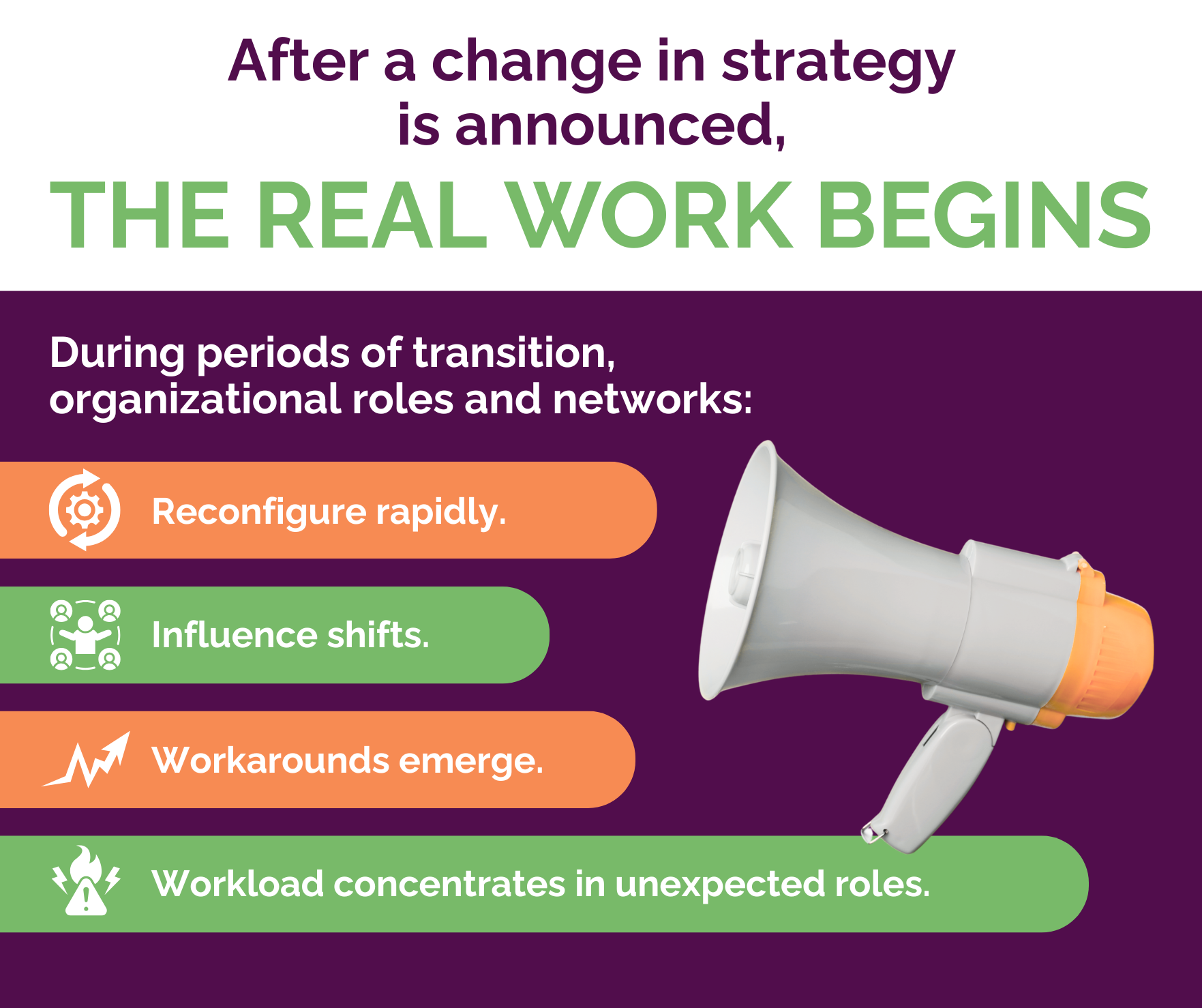
Without careful consideration of the people-side of change, leadership often sees visible indicators of:
- Delays
- Cost overruns
- Disengagement
- Attrition
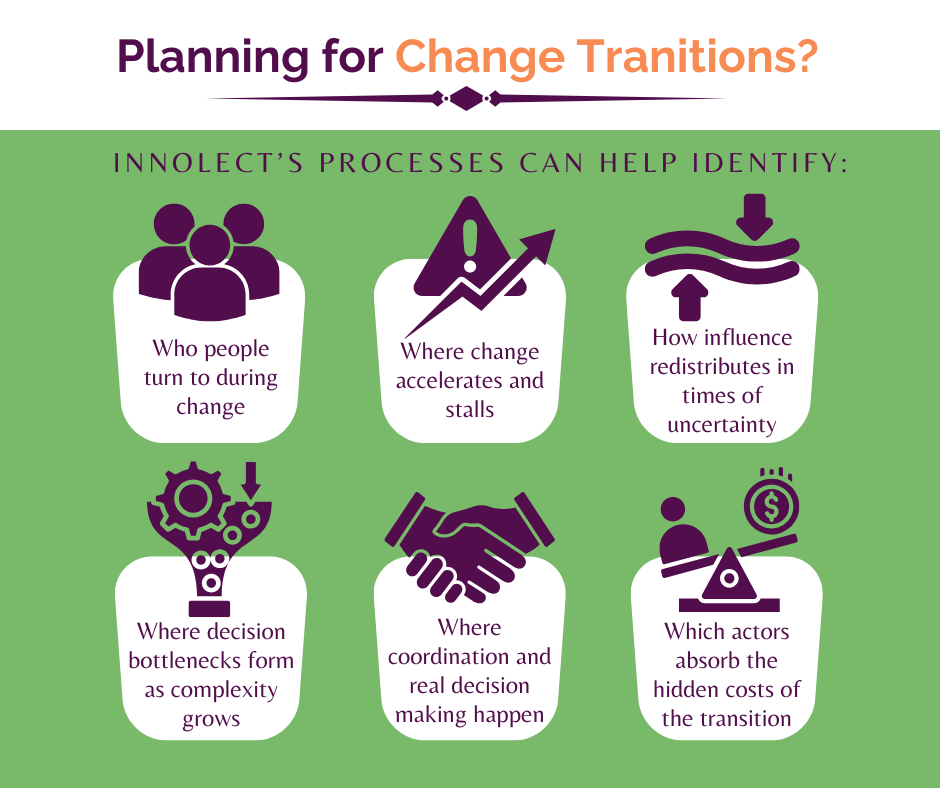
Rather than a focus on formal structures, roles, processes and timelines, integrate evidence-based insight into the human systems carrying change forward. Use our tested tools:
- Organizational Network Analysis (ONA) to visualize transition dynamics and interaction patterns driving change.
- Strategic Listening Architecture™ to surface unexpressed needs or concerns that shape workplace engagement and effectiveness.
- Readiness Assessment to equip leaders with the soft-skills required to build trust, confidence and capability. Coming soon
- Organizational Assessment to understand perceptions, engagement and how people feel about the change.
We help leaders see what others overlook—especially during change.
Contact us for more information about customization and to schedule an appointment.
Strategic Change Blogs

From Complexity to Clarity: A Blueprint for Modern Leadership
“Clear communication is not about saying more; it’s about helping others understand what matters most.” — Kittie W. Watson “The single biggest problem in communication is the illusion that it has taken place.” — George Bernard Shaw In today’s rapidly evolving workplace, leaders face unprecedented challenges, not only in maintaining focus and productivity but […]

From Resistance to Resilience: How Organizations Can Master Change Management
Change management is often the difference between organizations that thrive and those that struggle. Real-world examples show that success depends on leadership, employee engagement and a clear strategy. On the other hand, failure often comes from poor planning or resistance to change. Innolect helps organizations make change stick by aligning leaders, teams and departments around […]

Navigating Change with Confidence: Lessons from Innolect Inc.
In a world where uncertainty is the only constant, effective change management has become mission-critical for both corporate leaders and government agencies alike. Whether it’s implementing new systems, restructuring teams or adapting to global shifts, the ability to lead through change is a defining mark of resilient organizations. At Innolect Inc., we’ve spent decades partnering […]
Our Services
Growing
Teams
Learn More:
Growing
Organizations
Keynote Presentations &
Webinars